

Best eSIM for Hong Kong and China (No Apps Blocked)

May
Hong Kong and Mainland China share a land border and a ferry ride, but they sit in entirely separate digital worlds. One operates on open internet — Google, WhatsApp, YouTube, all working without restriction. The other runs behind the Great Firewall, where those same apps are blocked and a paid VPN is the usual workaround. Managing this digital divide while also crossing a physical border, often more than once on the same trip, is the connectivity challenge that most travel guides dismiss with a single sentence. The eSIM for Hong Kong and China doesn’t.
Understanding the “Digital Border” Between HK and Mainland China
Travelers who visit Hong Kong and Mainland China on the same trip — a pattern that has become increasingly common for business travelers, tourists doing the Greater Bay Area circuit, and anyone transiting through Shenzhen — encounter a connectivity problem that is easy to underestimate until it bites them.
Hong Kong operates under “One Country, Two Systems” — including in telecommunications. The city has its own telecom regulator (OFCA), its own carrier licensing structure, and crucially, open internet access with no content filtering. You can use Google Maps, stream YouTube, message on WhatsApp, and post to Instagram freely on any Hong Kong SIM card.
Cross into Mainland China — whether through Lo Wu MTR station, the Hong Kong-Zhuhai-Macau Bridge, or the high-speed rail at West Kowloon — and that open internet disappears. Mainland China’s Great Firewall (GFW) blocks Google, WhatsApp, YouTube, Instagram, and thousands of other services at the infrastructure level. The apps do not slow down. They simply stop working.
The practical problem this creates: If you’re navigating from a hotel in Wan Chai to a factory in Shenzhen, Google Maps works for the first half of the journey and goes dark the moment you cross the border — right when you need it most in an unfamiliar city. This is not a hypothetical scenario. It happens to unprepared travelers every day.
The instinctive solution — using a VPN on a local SIM — introduces its own problems, which we’ll address in detail. The cleaner solution is choosing the right eSIM for Hong Kong and China from the start, one that eliminates the firewall problem entirely rather than patching around it.
The Privacy and Speed Advantage of Roaming eSIMs
Before comparing eSIM types, it is worth addressing an obstacle that catches many travelers off guard: local SIM registration requirements. Since 2022, both Hong Kong and Mainland China have implemented mandatory real-name registration laws for all locally-issued SIM cards. The requirements differ in specifics but share the same core demand — a passport scan uploaded to the carrier’s registration system before the SIM can be activated.
The real-name registration reality
In Mainland China, SIM card registration has been enforced for years, and purchasing a local SIM requires visiting a carrier store with a physical passport. Remote or self-service activation is not available for foreign visitors. In Hong Kong, the 2021 legislation that came into effect in early 2023 now requires passport registration for prepaid SIMs as well — eliminating the previous convenience of anonymous tourist SIMs available at any 7-Eleven.
For short-term travelers, this creates a choice between two uncomfortable options: queue at an airport carrier kiosk, hand over a passport, and upload biometric data to a database managed by an unfamiliar local operator — or arrive without local connectivity and scramble for a solution.
Why International Roaming eSIMs Are Different
International roaming eSIMs from providers like Twise operate as roaming services — not locally-issued SIM cards. Because they are classified under international roaming agreements (ITU protocols), they fall outside the scope of both Hong Kong’s and Mainland China’s domestic SIM registration mandates. Customers activate the eSIM with an email address and a foreign payment card. No passport upload. No carrier kiosk. No queue.
The entire activation process — purchase, QR code scan, profile installation — takes under five minutes and can be completed at home before departure. By the time the plane lands, the eSIM is already active and ready to connect.
How the Firewall Bypass Actually Works
The Great Firewall operates at China’s Internet Exchange Points — the physical nodes where China’s domestic network connects to the global internet. Every data packet leaving a locally-registered SIM passes through these inspection checkpoints. Google’s servers are on the block list. The packet never reaches them.
An international roaming eSIM takes a fundamentally different route. Here is how the two data paths compare:
| Local / Domestic SIM (Type A)
Your device ↓ China Mobile / Unicom tower ↓ Domestic network backbone ↓ Great Firewall inspection ↓ Google / WhatsApp blocked |
International Roaming eSIM (Type B)
Your device ↓ China Mobile / Unicom tower ↓ International roaming gateway ↓ Open global internet ↓ Google, WhatsApp, Instagram: working |
The physical tower is the same in both cases. The device sends and receives on the same spectrum. The difference is entirely in where the data exits the Chinese carrier’s network. A roaming eSIM exits through an international gateway before the GFW inspection layer applies — which is why this approach is 100% legal. International roaming is governed by ITU protocols that predate the Great Firewall’s architecture, and foreign visitors using roaming SIMs are using the same infrastructure that business travelers on corporate plans have used for decades.
What stays unblocked on a roaming eSIM in Mainland China: Google Maps, Google Search, Gmail, YouTube, WhatsApp, Instagram, Facebook, Twitter/X, Telegram, and virtually all globally-accessible services. Apps that require a Chinese account (WeChat, Didi, Alipay) continue working normally alongside unblocked apps — the roaming gateway does not restrict Chinese services, it simply stops the GFW from restricting foreign ones.
Comparing Your Options: Single-Carrier vs. Multi-Carrier eSIM
Once you’ve established that an international roaming eSIM is the right product type for a Hong Kong and China trip, the next decision is architecture: a dedicated single-carrier plan or a multi-carrier auto-switching plan. Both are legitimate approaches with different trade-off profiles.
| Option A
Dedicated Single-Carrier eSIM ✅Predictable performance on a known network ✅Specific carrier preference honored (e.g., China Mobile for rural coverage) ✅Twise offers dedicated plans for single-carrier travelers ❌Requires two separate eSIM profiles for HK + Mainland ❌Manual profile switching at the border ❌Connectivity gap possible during the switch ❌Higher combined cost vs. a unified multi-carrier plan |
Option B (Recommended)
Multi-Carrier Auto-Switching eSIM ✅One eSIM, one QR code, one data pool ✅Accesses China Mobile, Unicom, and Telecom ✅Selects strongest available signal automatically ✅Seamless HK + Mainland coverage from a single plan ✅Eliminates manual profile switching at the border ❌Carrier selection is automatic, not manual ❌Network transitions not always instantaneous (see below) |
For the vast majority of travelers doing a Hong Kong and China itinerary — whether it’s a weekend in Shenzhen from HK, a week-long business circuit, or a multi-city tourist loop — the multi-carrier plan is the architecturally correct choice. The single-carrier option makes sense for long-stay travelers who have a strong reason to prefer a specific carrier’s coverage profile, particularly for deep inland China travel where China Mobile’s rural advantage becomes meaningful.
Read more: China Mobile eSIM Review: The Smart Choice for Mainland China Travelers
A Realistic Look at Multi-Carrier Auto-Switching Technology
Multi-carrier eSIMs are sometimes described as if they deliver instant, frictionless perfection at all times. A more honest account is more useful. The technology is genuinely impressive — but it has real-world nuances that travelers should understand before they cross a border.
How the switching actually works
A multi-carrier eSIM continuously scans available networks and selects the one delivering the strongest signal at any given moment. In static environments — a hotel room, a restaurant, an office — this works seamlessly, and you are unlikely to notice it happening at all. The eSIM establishes a connection and maintains it.
In transit environments — a high-speed train accelerating out of a tunnel, a car crossing the Lo Wu bridge, a ferry approaching Macau — the picture is slightly more complex. Your device can “cling” to a weakening signal from a carrier that is becoming less optimal, because the handover detection process takes a moment to confirm that a better network is available. This is not unique to roaming eSIMs; it is standard behavior in any device managing cellular handovers between towers.
The airplane mode fix — and when to use it: If you notice connectivity slowing during a border crossing or transit between cities, a quick Airplane Mode toggle (ON for 5 seconds, then OFF) forces your device to re-scan all available towers and latch onto the strongest current signal. This is not a sign that something is broken — it is a 10-second manual override of a detection process that would otherwise resolve itself within a few minutes. Keep this in your back pocket for transit moments.
Why three carriers beats one in dense urban environments
Beyond border crossing scenarios, the multi-carrier approach delivers a practical advantage in environments where single carriers struggle: the deep interior of a Shenzhen skyscraper, a Guangzhou metro station at rush hour, or a crowded venue during peak network congestion. When one carrier’s local tower is overloaded, a multi-carrier eSIM can route traffic through an alternative. A single-carrier eSIM has no fallback.
Why the Greater Bay Area Demands a Unified Connectivity Approach
The Guangdong-Hong Kong-Macau Greater Bay Area (GBA) — spanning 11 cities including Hong Kong, Macau, Shenzhen, Guangzhou, and seven Pearl River Delta cities — is increasingly functioning as a single economic and travel zone. Cross-border daily commuting between Shenzhen and Hong Kong has become routine for tens of thousands of people. Business travel within the GBA frequently involves multiple border crossings in a single day.
For travelers operating within this zone, the connectivity challenge is not just about occasional border crossings. It is about maintaining consistent, unblocked internet access across a region that spans two separate regulatory frameworks — often within hours of each other.
| Feature | Twise Multi-Carrier eSIM | Local HK SIM + Local CN SIM | Home Carrier Roaming |
| HK open internet | Yes | Yes (HK SIM) | Yes |
| Mainland unblocked internet | Yes (roaming gateway) | No (GFW applies) | Yes |
| SIM registration required | None | Both HK + CN passports | None |
| Border crossing UX | Seamless / auto-switch | Manual SIM swap | Usually seamless |
| Shared data pool | Yes — one pool | Two separate pools | One pool, expensive |
| VPN required | No | Yes (for mainland) | No |
| 7-day estimated cost | ~$15–25 | ~$25–45 combined | ~$80–150+ |
| Activation before departure | Yes — email QR | Must be in-country | Already active |
Home carrier roaming is the only other option that delivers automatic border-crossing continuity and unblocked internet — but at a price point that makes it viable only for the shortest of trips or for travelers with premium corporate plans. A Twise multi-carrier eSIM delivers the same seamless border experience at a fraction of the cost.
Setup Guide and Practical Tips for Seamless Border Crossing
The technology does most of the work — but a few setup decisions made before departure determine whether that technology performs at its best.
Enable data roaming — this is the most critical step
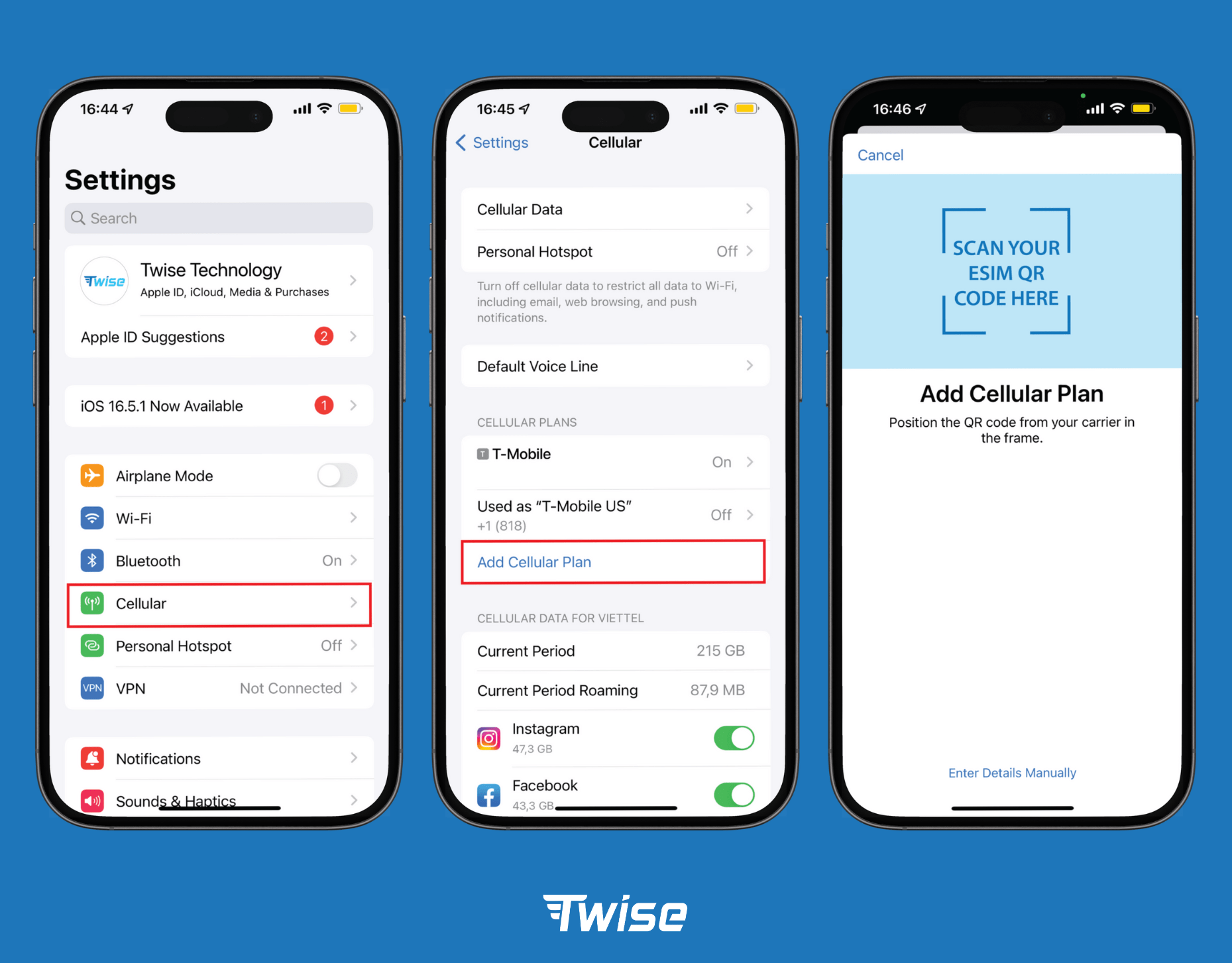
Because an international roaming eSIM bridges multiple carrier networks, your device’s operating system classifies every connection outside its home network as “roaming.” This means data roaming must be enabled in your phone settings for the eSIM to access carrier towers in Hong Kong and Mainland China. Go to Settings → Mobile Data (or Cellular) → Data Roaming and turn it on. Do this before departure; it persists across all subsequent border crossings automatically.
Install the eSIM profile before you enter Mainland China
eSIM profile installation requires a stable internet connection to download the carrier profile. Install your eSIM at home or at your departure airport while connected to Wi-Fi. Do not leave this for arrival in China, where you would need to connect to hotel Wi-Fi to install the very product that was meant to solve your connectivity problem. Once installed, the eSIM activates and connects automatically when it detects a compatible tower — no further action needed.
Run the eSIM alongside your physical SIM for calls and 2FA
Most international roaming eSIMs are data-only plans. If your device supports dual SIM (physical + eSIM simultaneously), keep your home physical SIM active alongside the eSIM. Your home number remains available for emergency calls and SMS-based two-factor authentication codes, while the eSIM handles all data traffic. This is the optimal configuration for most travelers and requires no additional setup — modern iPhones, Samsung flagships, and Pixel devices all support this dual-SIM mode natively.
Verify device compatibility before purchasing
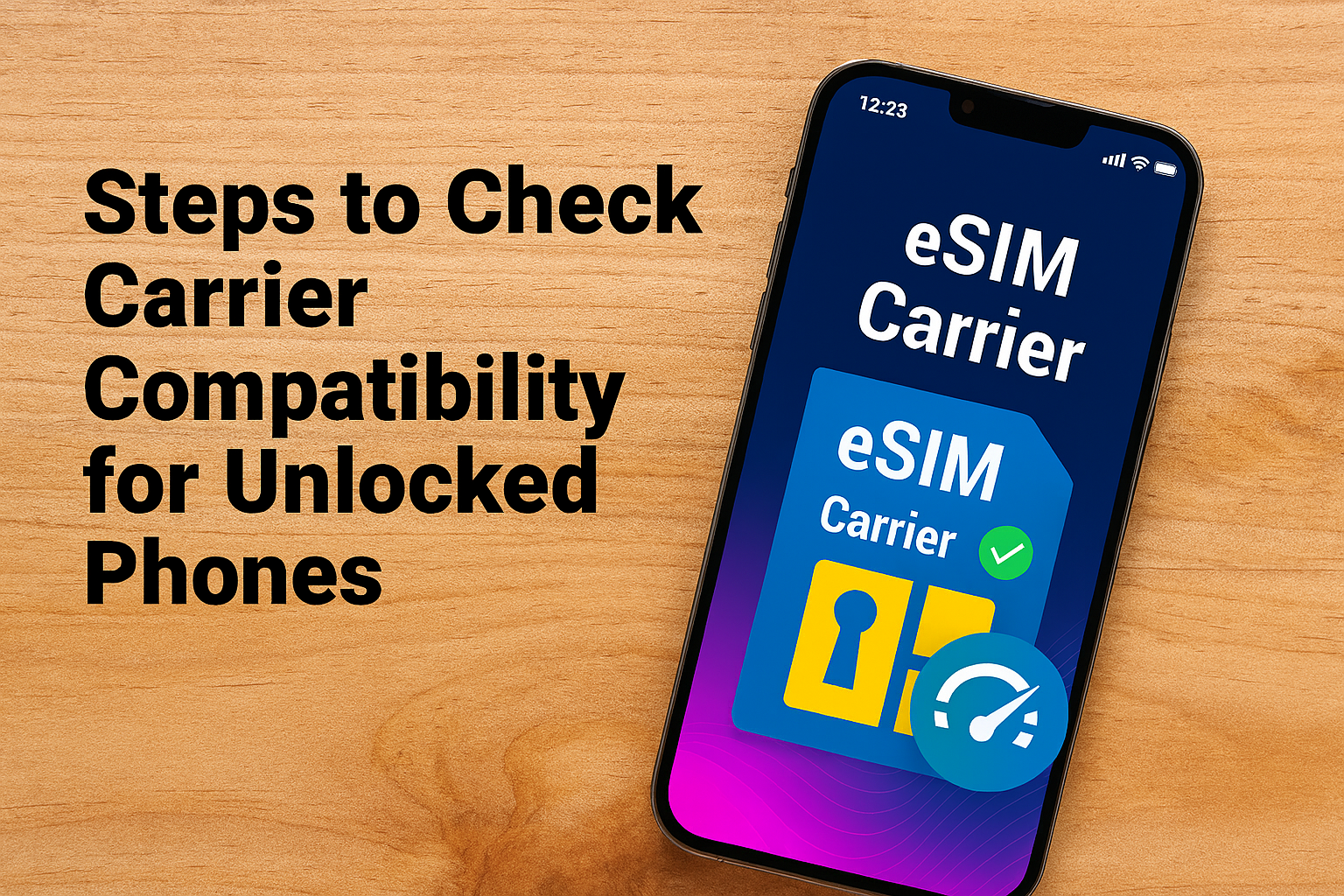
eSIM support has been standard on flagship smartphones since 2018–2020, but there are exceptions. Some Android devices sold in Mainland China have eSIM functionality disabled at the hardware level — a manufacturing decision made for the domestic market. Check your device’s official specifications page or your provider’s compatibility list before purchasing. Apple iPhone XS (2018) and later, Samsung Galaxy S20 and later, and Google Pixel 3 and later are all compatible. Budget Android devices vary significantly.
Read more: Can my device work with eSIM?
Use the airplane mode trick at border crossings
When crossing from Hong Kong into Mainland China or vice versa, a quick Airplane Mode toggle (on for 5–10 seconds, then off) forces the eSIM to re-scan all available carrier towers and select the optimal network for your new location. This is particularly useful at the Lo Wu or Lok Ma Chau border checkpoints, on the HZMB bridge, and when disembarking the high-speed rail at a mainland station. The total time cost is under 30 seconds; the connectivity benefit is immediate.
Download offline map backups — but keep expectations realistic
Even with an unblocked roaming eSIM, having offline Google Maps packs downloaded for Hong Kong, Shenzhen, and Guangzhou is a sensible backup. Cellular dead zones exist in both territories — dense urban basements, certain MTR sections, and remote areas alike. Offline maps ensure navigation continues even during brief signal gaps, regardless of your eSIM type.
Final Verdict: Which eSIM for Hong Kong and China Is Right for You?
The decision framework for the best eSIM for Hong Kong and China comes down to three questions: How many times will you cross the border? Do you need unblocked internet on the mainland? And are you willing to manage a VPN setup in exchange for a lower headline price?
For travelers doing any combination of Hong Kong and Mainland China on a single trip: A Twise multi-carrier international roaming eSIM is the clearest recommendation. One plan covers both territories, auto-switches between the three mainland carriers and Hong Kong’s premium networks, bypasses the Great Firewall without any VPN setup, and activates before departure with no passport upload. The total cost — typically $15–25 for a week — is lower than the combined cost of two local SIMs, and significantly lower than the hidden cost of a local SIM plus a VPN subscription plus the reliability risk that VPN introduces.
For travelers visiting Hong Kong only with no mainland stops: A dedicated Hong Kong eSIM — including single-carrier options from Twise on 3HK or SmarTone — provides excellent coverage at a lower price point than a dual-territory plan. No mainland routing is needed, and the registration-free activation advantage still applies.
For long-stay residents or frequent China travelers with established VPN setups: A domestic Chinese SIM becomes cost-competitive beyond 30 days, particularly with an annual VPN subscription already in place. The roaming eSIM’s value proposition is strongest for shorter visits where the setup overhead of a VPN and local SIM registration is a disproportionate burden.
Travelers should not have to choose between reliable coverage and open internet, or between convenience and privacy. A well-chosen international roaming eSIM eliminates all three compromises at once — which is why, for the Hong Kong and China itinerary specifically, it remains the option that the evidence consistently points to.
Cross the digital border without missing a step. Explore Twise’s full range of Hong Kong and China eSIM plans — roaming on premium networks in both territories, no apps blocked, no registration required. Explore Twise HK & China Plans.
