

Japan eSIM 14 Days: Best Providers for Tourists and How to Buy Them
Jan
Japan has long been one of the most attractive destinations in Asia, but in recent years, Japan esim 14 days have become especially popular among international travelers. Two weeks is the ideal duration: long enough to explore multiple regions, yet short enough to fit into annual leave schedules. Many visitors plan ambitious itineraries such as Tokyo → Kyoto → Osaka → Hiroshima, while others extend their journey north to Hokkaido or south to Kyushu, combining big cities with countryside experiences.
As itineraries grow more complex, travelers rely heavily on mobile data. Navigation apps, real-time train schedules, online bookings, translation tools, and social media uploads all demand a stable internet connection. This has driven a significant surge in eSIM usage among tourists, especially those seeking a more convenient and cost-effective alternative to physical SIM cards and portable WiFi devices.
This leads to the core questions many travelers ask before departure:
- Which providers offer a Japan eSIM valid for 14 days?
- What is the easiest and most reliable way to buy and activate an eSIM for Japan?
In this comprehensive guide, you will learn:
- The best 14-day Japan eSIM providers, including domestic and global options
- A detailed comparison of data plans, networks, and pricing
- Step-by-step activation instructions for iPhone and Android
- Clear recommendations on which plan suits different travel styles
Whether you are researching an esim for Japan for the first time or comparing options for your next trip, this article will help you make an informed decision.
1. What Do Travelers Typically Need for a 14-Day Trip in Japan?
a. Understanding 14-day travel patterns
A two-week trip usually involves:
- Multiple city transfers using Shinkansen and local trains
- Frequent hotel or Airbnb check-ins
- Day trips to nearby towns or rural areas
- Heavy reliance on maps, transit apps, and translation tools
Compared to shorter stays, longer trips naturally lead to higher data consumption, especially when travelers move across regions.
b. Data usage expectations
While usage varies by traveler, typical daily consumption falls into these categories:
- Light travel (1–2GB/day)
Messaging apps, occasional Google Maps use, light browsing - Moderate travel (3–5GB/day)
Navigation, social media, photo uploads, streaming short videos - Heavy travel (6–10GB/day)
Video streaming, frequent uploads, cloud backups, hotspot usage
c. Total recommended data for 14 days
Based on these patterns:
- Minimum requirement: ~15GB
- Comfortable range: 20–30GB
- Heavy users: Unlimited data plans are strongly recommended
Choosing insufficient data often leads to speed throttling or unexpected top-ups, which can disrupt travel plans.
d. Situations that significantly increase data usage
Travelers often underestimate data consumption caused by:
- Uploading photos and videos to Instagram, TikTok, or YouTube
- Extensive use of Google Maps and transit navigation
- Real-time translation apps (Google Translate, voice mode)
- Booking hotels, attractions, and transport on the go
- Using hotspot to connect laptops, tablets, or multiple phones
For these reasons, selecting the right esim in Japan is essential for a smooth 14-day journey.
2. Understanding the Japan Mobile Network Ecosystem
Japan has one of the most advanced mobile infrastructures in the world, but network choice still matters.
a. Main mobile networks in Japan
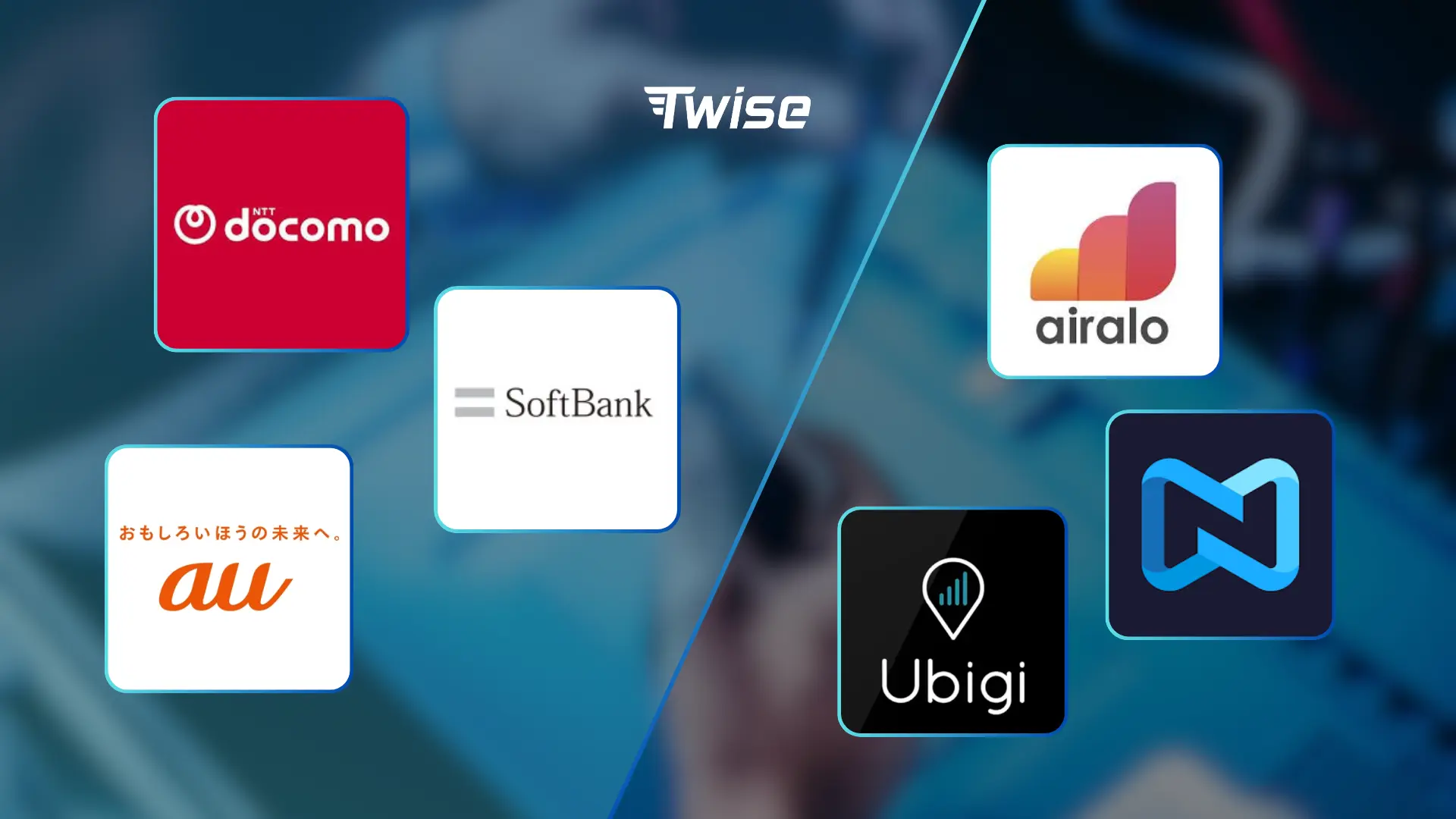
- NTT Docomo
The widest coverage nationwide, especially strong in rural and mountainous regions - KDDI / AU
Excellent 4G and 5G speeds, strong performance in cities, subways, and indoors - SoftBank
Reliable urban coverage with fast speeds in major metropolitan areas
b. Domestic providers vs. global eSIM apps
- Domestic providers (Docomo, KDDI, SoftBank MVNOs)
- Higher network priority
- Better speeds during peak hours
- More reliable coverage outside major cities
- Global eSIM apps (Airalo, Nomad, Ubigi)
- Extremely convenient
- Often rely on roaming agreements
- May experience slower speeds or deprioritization
c. Why network choice matters for a 14-day itinerary
Long trips often extend beyond Tokyo and Osaka. Areas such as Hokkaido, Takayama, Nagasaki, or rural Kyoto Prefecture benefit greatly from Docomo’s extensive coverage. Selecting the wrong network can result in weak signals or unstable speeds during critical moments.
3. Which Providers Offer a Japan eSIM 14 Days?
Below are the most reliable options available, with a focus on performance, value, and suitability for different travel styles.
a. Twise – KDDI Unlimited 14-Day eSIM
Data: True unlimited high-speed data*
Network: AU / KDDI
Best for:
- Heavy data users who stream, browse, and navigate all day
- Families sharing hotspot across multiple devices
- Content creators uploading photos and videos
- Remote workers relying on cloud tools and video calls
Strengths:
- Fast, stable 4G/5G speeds on the KDDI network
- Excellent indoor and subway coverage, including major train lines
- Ideal for streaming, maps, cloud services, and social media
- Simple QR-code installation with no setup complexity
Thanks to Twise’s direct partnership with KDDI, users benefit from:
- Domestic-level network performance
- Quick technical support
- Instant QR code delivery (usually within 1–2 minutes after payment)
For travelers staying around two weeks in Japan, this plan delivers the best balance of speed, reliability, and convenience.
Available via the official Twise website: https://twise.tech/esim/

b. Twise – IIJmio (Docomo Network) High-Capacity Plans
Data options: 10GB, 20GB, 30GB
Network: NTT Docomo
IIJmio is a well-known Japanese MVNO using Docomo’s infrastructure.
Best for:
- Multi-city travelers
- Rural or regional itineraries
- Travelers who prioritize coverage over raw speed
Why choose IIJmio:
- Excellent stability in remote areas
- Consistent performance across Japan
- Ideal balance between cost and reliability
c. Twise – SoftBank Daily Data Plans
Data: 500MB–3GB per day
Network: SoftBank
Daily-reset plans remove the stress of total data caps.
Best for:
- City-focused travel
- Short daily usage patterns
- Travelers staying mainly in Tokyo, Osaka, or Nagoya
Key advantage:
- Data resets every day, preventing overuse anxiety
4. Comparison Table: Best Japan eSIM 14 Days
| Provider | Network | Data Type | Validity | Best For |
| Twise – KDDI Unlimited | AU / KDDI | Unlimited | 14 days | Heavy data users |
| Twise – IIJmio | Docomo | 10–30GB | 14–30 days | Rural coverage |
| Twise – SoftBank Daily | SoftBank | Daily reset | 14 days | City travel |
| Airalo | KDDI (Roaming) | 1–10GB | 14 days | Casual users |
| Nomad | KDDI / SoftBank (Roaming) | 5–20GB | 14 days | Medium users |
| Ubigi | SoftBank (Roaming) | Fixed plans | 14–30 days | Light users |
5. How to Purchase a Japan eSIM 14 days
There are two main ways to buy a Japan eSIM, depending on your travel needs and whether you require a local phone number.
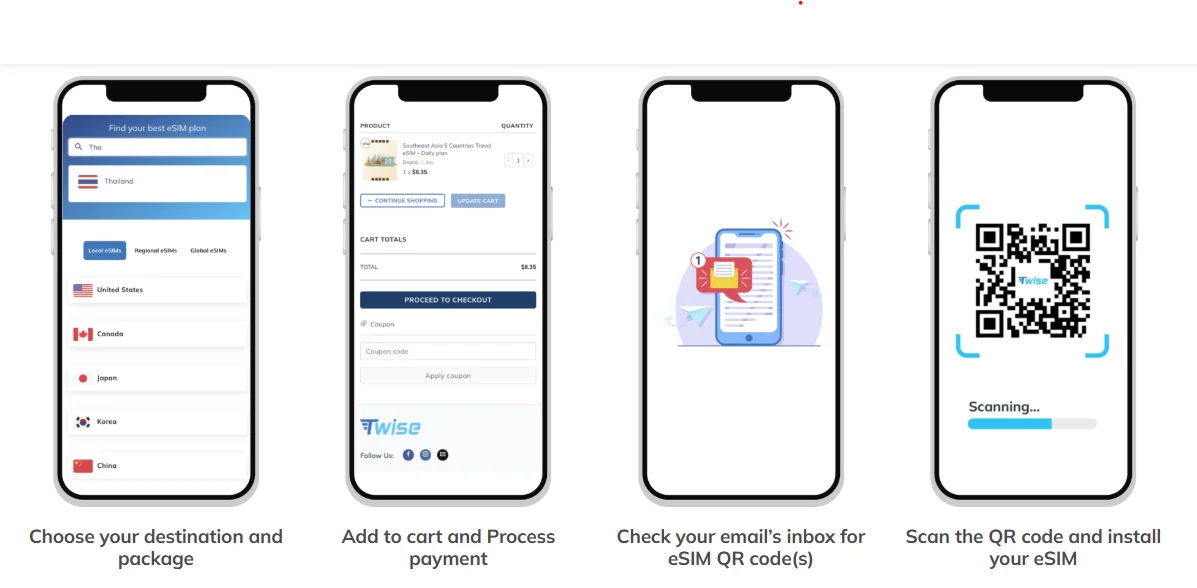
a. Buying before leaving your home country
This is the most recommended approach:
- Purchase online in advance
- Receive QR code instantly
- Activate upon arrival in Japan
With this approach, your phone connects to local networks immediately after landing – no need to search for Wi-Fi or visit airport counters.
b. Buying after arriving in Japan
For travelers who need a Japanese phone number, it is often better to buy after arrival because identity verification may be required.
Options include:
- Airport counters
- Electronics stores (Bic Camera, Yodobashi Camera)
However, buying on arrival usually comes with drawbacks:
- Higher prices compared to online eSIMs
- Longer waiting times
- Limited English-language support
c. Where tourists prefer to buy
To save time and avoid complications, most travelers choose online platforms, such as:
- The Twise official website
- Global eSIM apps like Airalo or Nomad
- Selected SoftBank airport kiosks (limited availability)
For short-term trips like a 14-day stay, buying online before departure remains the easiest and most reliable option.
6. Step-by-Step Activation Guide
- Check iPhone or Android eSIM compatibility
- Purchase your plan from the provider
- Scan the QR code provided via email
- Enable mobile data and roaming
- Set APN (if required)
- Restart your device
- Verify signal strength and speed
Troubleshooting tips:
- No signal: ensure data roaming is ON
- eSIM not downloading: restart device and retry
- Slow speed: switch network mode to 4G/5G manually
7. How to Choose the Best Japan eSIM 14 days
Choosing the right Japan eSIM for 14 days depends on your travel style, itinerary, device, and budget. Here’s how to decide.
a. Based on Your Data Usage Habits
- Heavy data users (navigation all day, video uploads, hotspot sharing): choose KDDI Unlimited for stable high-speed performance.
- Travelers exploring rural or remote areas: Docomo-based networks (such as IIJmio) offer the most consistent nationwide coverage.
- Budget-focused travelers with light to moderate usage: global eSIM apps can work, though speeds may be lower.
b. Based on Your Travel Itinerary
- Tokyo – Kyoto – Osaka routes: all major Japanese networks perform well in these urban corridors.
- Hokkaido, Nagasaki, Takayama, or mountain regions: Docomo is generally the most reliable option.
c. Based on Your Device
- Some Android phones support fewer Japanese frequency bands, which can affect speed and coverage.
- Always check eSIM compatibility and band support before purchasing.
d. Based on Price vs. Performance
- Domestic Japan eSIM providers usually offer the best balance of speed, stability, and cost.
- Global eSIMs are convenient for multi-country trips but often come with lower network priority in Japan.
For a 14-day trip, selecting the right eSIM upfront ensures stable connectivity without overpaying or running out of data mid-journey.
Conclusion
Many providers offer Japan esim 14 days, but real-world performance varies significantly depending on the network and data type. For travelers planning an intensive itinerary, choosing the right esim in Japan can make the difference between a smooth journey and daily connectivity issues.
Best recommendations by category:
- Best overall: Twise KDDI Unlimited 14 Days
- Best coverage: Twise IIJmio (Docomo Network)
- Best budget & convenience: SoftBank daily plans or global eSIM apps
Final reminders:
- Buy your eSIM before departure whenever possible
- Match data volume to your actual usage habits
- Choose domestic networks for faster, more reliable connections
Twise’s customer support is available 24/7 to assist you. You can contact them through the official channels below for immediate help:
– Facebook Fanpage: Twise
– Email: support@twise.tech
– WhatsApp: (+1) 818-915-0777
