

One eSIM for Japan and Thailand: Is It Possible? Best Multi-Country Options
Feb
Travel itineraries across Asia are becoming more flexible and multi-destination than ever before. Instead of choosing just one country, many travelers now combine Japan and Thailand in a single trip — pairing Japan’s ultra-modern cities and cultural landmarks with Thailand’s beaches, food scene, and relaxed lifestyle.
With this trend comes a very common question among travelers planning connectivity:
Can one eSIM work for both Japan and Thailand?
The short answer is yes — but there are trade-offs that travelers must understand before choosing an eSIM for Japan and Thailand.
In this guide, we’ll break down:
- How international and local eSIMs actually work
- The real differences in cost, speed, and stability
- When a single eSIM is worth it
- When using separate local eSIMs delivers better value
If you’re planning an eSIM for Japan trip to Japan that also includes Thailand, this article will help you choose the most reliable and cost-effective option.
I. Is It Possible to Use One eSIM for Japan and Thailand?
a. International / Regional eSIM Explained
An international or regional eSIM is designed to work across multiple countries using one eSIM profile. These eSIMs rely on roaming agreements rather than direct access to domestic mobile networks.
How international eSIMs work
- One eSIM profile covers many countries
- The eSIM connects to partner networks via roaming
- Network selection happens automatically when you cross borders
- No need to install a new eSIM in each country
These products are commonly sold as:
- Asia regional eSIMs
- Global travel eSIMs
- Multi-country roaming eSIMs
From a convenience standpoint, this sounds ideal for travelers visiting Japan and Thailand in one trip.
Example:
A traveler flying from Tokyo to Bangkok could purchase a Twise eSIM SEA 5 countries plan. With this setup, the same eSIM profile automatically connects to a Singapore partner network while in Singapore and then switches to a Thai partner network upon arrival in Thailand — without requiring a new QR code or additional installation.
b. Coverage in Japan and Thailand
International eSIMs do offer coverage in both countries, but the type of connection matters.
Read more:
Japan
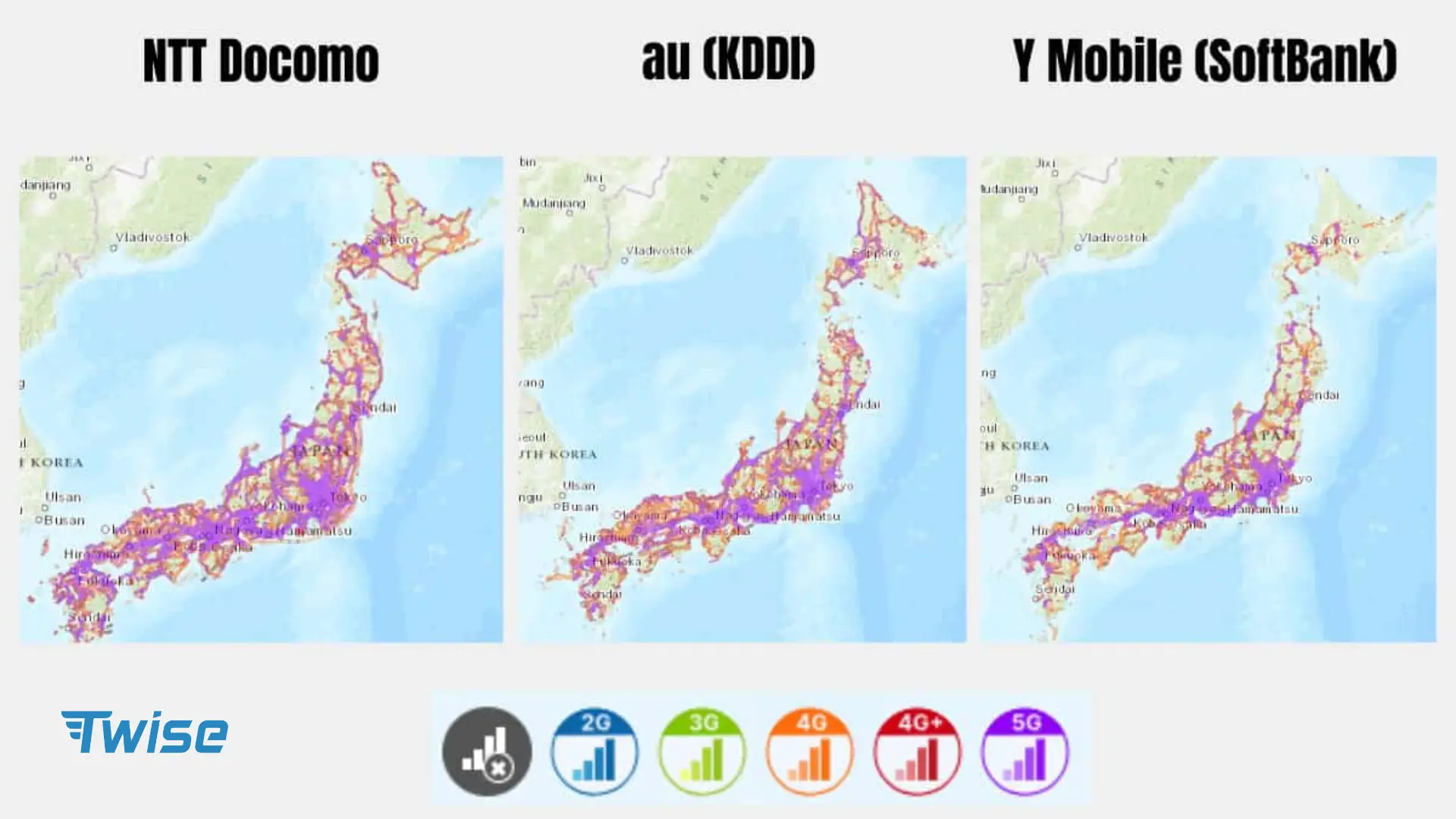
- Most international eSIMs roam on Docomo or SoftBank
- Access is indirect, meaning roaming priority rather than domestic priority
Thailand
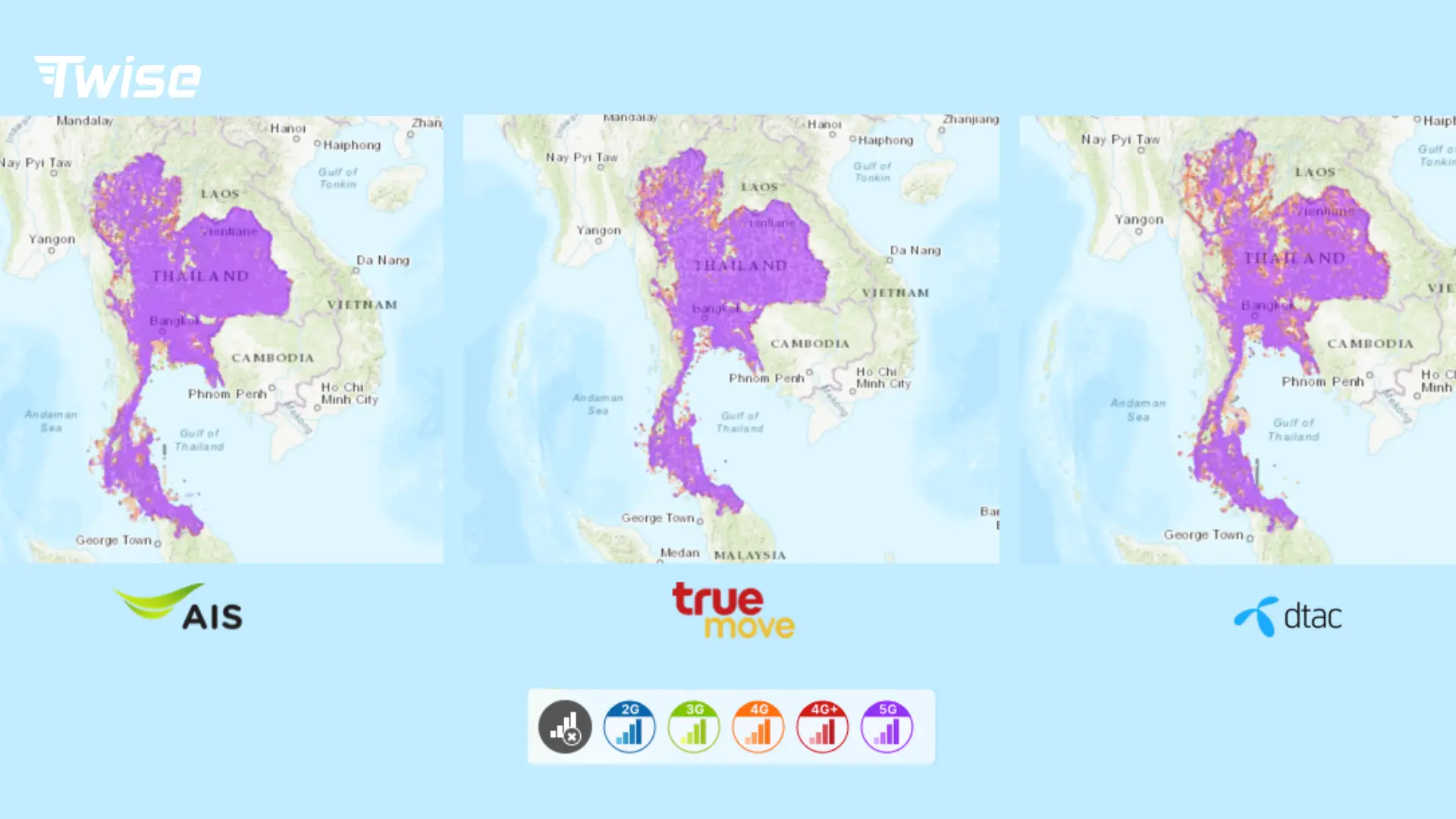
- Typical roaming partners include AIS, DTAC, or True
- Coverage is generally good in cities but may fluctuate outside tourist zones
While these connections work, they differ significantly from local eSIMs in terms of stability and latency.
II. Pros and Cons of Using One International eSIM
a. Advantages of One eSIM for Japan and Thailand
Using a single eSIM for Japan and Thailand has clear benefits:
- One purchase and one QR code
- No need to manage multiple eSIM profiles
- No switching required between countries
- Ideal for travelers who want simplicity
- Convenient for short stopovers or transit trips
- Works well for light usage (maps, chat apps, browsing)
For travelers prioritizing convenience over performance, this approach can be appealing.
b. Disadvantages of International eSIMs
Despite the convenience, there are several limitations:
- Higher cost per GB compared to local eSIMs
- Roaming routing leads to higher latency
- Slower speeds during peak hours
- Network switching may be unstable
- Lower priority on domestic carrier infrastructure
For travelers relying heavily on mobile data, these issues become noticeable quickly.
III. Cost Comparison: International vs Local eSIM
a. Why International eSIMs Cost More
International eSIMs are typically more expensive due to:
- Wholesale roaming fees paid to local carriers
- Multi-country backend infrastructure
- Additional routing and network management costs
These extra layers increase operational costs, which are passed on to travelers.
b. Typical Price Ranges
| eSIM Type | Japan + Thailand Coverage | Cost per GB |
| International eSIM | Yes | Higher |
| Local Japan eSIM | Japan only | Lower |
| Local Thailand eSIM | Thailand only | Lower |
In many cases, purchasing two local eSIMs (one for Japan, one for Thailand) costs less than a single international eSIM with similar data limits.
IV. Network Stability: Roaming vs Local eSIM
a. How Roaming Impacts Performance
When using an international eSIM, your data often travels:
- From your phone
- Through a roaming gateway
- To servers outside the country
- Then back to the local network
This causes:
- Because the connection is not fully localized, this process increases latency and can lead to slower page loading times
- Less stable video calls, and occasional buffering when streaming.
- These effects tend to become more noticeable during peak usage hours when networks are congested.
This is especially noticeable in Japan, where high-speed local infrastructure favors domestic connections.
b. Why Local eSIMs Are More Stable
Local eSIMs connect directly to domestic carriers, offering:
- Because local eSIMs operate on native infrastructure, they typically deliver faster response times and lower latency.
- Apps load more quickly, maps refresh smoothly, and web pages respond without noticeable delay.
- Signal consistency is also stronger, especially in dense urban environments where network congestion can affect roaming-based connections.
- Another advantage is higher network priority. Domestic subscribers and locally routed eSIMs are often treated more favorably than roaming traffic during peak hours.
For any esim for japan trip, local eSIMs provide a smoother experience — particularly in crowded cities and transit systems.
V. When One eSIM for Japan and Thailand Makes Sense
Using a single international eSIM is reasonable if you:
- Stay only a few days in each country
- Use limited data
- Prioritize convenience above performance
- Have frequent border crossings
- Need a backup connection rather than a primary one
For these traveler profiles, the simplicity of one eSIM outweighs the disadvantages.
VI. When Local eSIMs Are the Better Choice
Local eSIMs are generally better if you:
- Stay longer than 5–7 days in each country
- Use navigation, ride-hailing, and translation apps heavily
- Work remotely or attend online meetings
- Stream video or use hotspot/tethering
- Travel outside major tourist areas
In these cases, roaming limitations become frustrating and costly.
VII. Using Separate Local eSIMs: How It Works
a. Installing Multiple eSIMs on One Phone
Modern smartphones support:
- Modern smartphones are designed to support multiple stored eSIM profiles at the same time
- Only one can be active for mobile data.
Before your trip, you can install both:
- A Japan local eSIM
- A Thailand local eSIM
before your trip without issues.
b. Switching Between Japan and Thailand
Switching is simple:
- Install both eSIMs in advance
- Keep them inactive until arrival
- Activate the Japan eSIM when landing in Japan
- Switch to the Thailand eSIM upon arrival in Thailand
The process takes less than one minute in phone settings.
VIII. Local eSIM Options for Japan and Thailand
a. Japan Local eSIM (via Twise)
Japan local eSIMs from Twise connect directly to native Japanese mobile networks, with KDDI (AU) as a key backbone, alongside SoftBank and Docomo.
Key benefits:
- True domestic-network connectivity (not roaming-based)
- Excellent nationwide coverage across Japan
- Strong performance in both major cities and rural areas
- Stable 4G/5G speeds, especially on the KDDI network
Thanks to this local routing, Japan local eSIMs are a reliable choice for any Japan eSIM trip, whether you’re visiting for a few days or staying for several weeks.
b. Thailand Local eSIM
Thailand local eSIMs use: AIS, DTAC, True
Benefits
- Excellent coverage in Bangkok, Chiang Mai, Phuket
- Strong performance in tourist destinations
- Reliable speeds for navigation and payments
IX. Where Twise Fits In
When evaluating options for an eSIM for Japan and Thailand, Twise takes a different approach from many regional providers. Instead of offering a roaming-based multi-country product, Twise provides separate local eSIMs for Japan and Thailand.
Key advantages
- Local-network routing reduces latency and avoids the detours associated with roaming gateways
- Cost per GB is typically lower compared to regional plans that bundle multiple countries into one profile
- Speeds are more stable during peak hours because traffic is handled as domestic data rather than international roaming
- Twise clearly states which local network is being used, giving travelers transparency about coverage and infrastructure.
Twise is well suited for travelers who:
- Travelers who want dependable mobile data in each destination, prefer direct access to domestic carriers, and do not mind switching between eSIM profiles when moving from Japan to Thailand.
- For those prioritizing network stability and predictable performance, this model often delivers better real-world results than a single roaming-based solution.

X. International eSIM vs Local eSIMs: Side-by-Side Comparison
| Factor | One International eSIM | Local eSIMs (Japan + Thailand) |
| Convenience | High | Medium |
| Cost | Higher | Lower |
| Speed stability | Medium | High |
| Network priority | Lower | Higher |
| Setup | One-time | Two eSIMs |
Conclusion
Yes, one eSIM can work for Japan and Thailand — international eSIMs do provide coverage in both countries.
However, that convenience comes with:
- International eSIMs often rely on roaming-based routing, which typically results in higher overall costs, less favorable cost per GB.
- Occasionally less stable speeds—especially during peak usage hours or in crowded areas.
- While they are convenient for short, multi-country itineraries, performance can vary depending on the partner network in each destination.
For most travelers planning an esim for japan trip that also includes Thailand, using two local eSIMs delivers better value, stronger performance, and more predictable connectivity.
Local eSIMs offer:
- Better network priority
- Lower cost per GB
- Reliable speeds in cities and rural areas
Twise provides a practical solution for travelers who prioritize network quality, cost efficiency, and stability, making it a strong choice for Japan–Thailand itineraries.
Twise’s customer support is available 24/7 to assist you. You can contact them through the official channels below for immediate help:
– Facebook Fanpage: Twise
– Email: support@twise.tech
– WhatsApp: (+1) 818-915-0777
