

Title: Japan eSIM 30 Days: Daily vs Fixed Data — Which Plan Is Better?
Jan
Japan is no longer just a short-stop destination. In recent years, it has become a long-stay travel hub for a wide range of visitors, including international students attending short-term programs, tourists on extended vacations, remote workers on workation visas, and travelers visiting family or friends for several weeks. For these travelers, staying connected reliably for an entire month is not optional—it is essential.
As a result, demand for a Japan eSIM 30 days plan has grown rapidly. Unlike short-term SIM cards designed for 7–10 days, 30-day eSIM plans are built for sustained, everyday use. However, travelers quickly discover that not all 30-day plans are the same. The most common comparison is between daily data eSIM plans and fixed data eSIM plans.
This article is designed to help you:
- Clearly understand the difference between daily allowance vs fixed data for a 30-day stay
- Identify which plan type best matches your real usage habits
- Discover reliable providers offering Japan eSIM plans for 30 days, with a strong recommendation for Twise
By the end, you will know exactly which Japan eSIM plan delivers the best value, performance, and peace of mind for a full month in Japan.
1. What Is a Japan eSIM 30 Days and How Does It Work?
A Japan eSIM 30 days is a digital SIM that provides mobile data access for a continuous 30-day period without requiring a physical SIM card. Once installed on your phone, it connects automatically to local Japanese networks and works just like a regular SIM—minus the inconvenience of swapping cards.
Key characteristics of a Japan eSIM
- 100% digital installation via QR code
- Uses major Japanese carriers such as Docomo, KDDI (AU), and SoftBank
- Compatible with modern smartphones including iPhone, Samsung Galaxy, Google Pixel, and other eSIM-enabled devices
- Activates automatically when the device connects to a Japanese network
- Can be purchased and installed before arriving in Japan
This makes a japan esim particularly attractive for long-term travelers who want immediate connectivity upon landing.
a. Who typically needs a 30-day Japan eSIM?
A 30-day plan is ideal for:
- Students attending language schools, exchange programs, or short courses
- Tourists planning slow travel across multiple regions
- Remote workers and digital nomads who rely on stable internet daily
- Business travelers on extended assignments or training programs
For these users, short-term SIM cards or pocket WiFi devices are often inconvenient, expensive, or unreliable over time.
Read more: Japan eSIM 14 Days: Best Providers for Tourists and How to Buy Them
2. Daily Data vs Fixed Data — What’s the Difference?
When choosing a Japan eSIM 30 days, you will usually encounter three categories: daily data plans, fixed data plans, and so-called unlimited plans. Understanding the difference is critical.
a. Daily Data Plans (1–5GB per day)
Daily data plans provide a set amount of high-speed data every 24 hours.
How it works:
- You receive, for example, 1GB/day
- At midnight (or every 24 hours), the data resets
- Over 30 days, 1GB/day equals 30GB total—but usage is capped daily
Pros:
- You never suddenly “run out” of data before the trip ends
- Easy to understand and manage
- Ideal for travelers who dislike tracking total data usage
- Suitable for consistent, light-to-medium daily usage
Cons:
- You cannot exceed the daily limit, even if you need more data that day
- Unused data does not roll over
- Heavy-use days (video uploads, hotspot use, streaming) can be restrictive
Daily plans are often marketed toward travelers who want predictability and simplicity rather than flexibility.
b. Fixed Data Plans (10–50GB for 30 days)
Fixed data plans provide one total data allowance to use freely over 30 days.
How it works:
- You buy, for example, 30GB valid for 30 days
- You can use any amount on any day until the data runs out
Pros:
- Full flexibility for heavy-use days
- Ideal for navigation, social media, and content creation
- Usually cheaper per GB than daily plans
- Excellent for multi-city itineraries such as Tokyo–Osaka–Kyoto–Hokkaido
Cons:
- If you use data too aggressively early, you may need a top-up
- After the high-speed data is used, speed may be throttled
For most long-term travelers, fixed data plans strike the best balance between price and performance.
c. Unlimited eSIM Plans (FUP-based)
Many providers advertise “unlimited” japan esim plans, but these are almost always subject to a Fair Usage Policy (FUP).
How it works:
- High-speed data is available up to a certain threshold (often 20–50GB)
- After that, speed is reduced significantly (128–384 Kbps)
Pros:
- Psychological peace of mind
- Suitable for very heavy users
- Useful for remote workers who cannot risk data cutoffs
Cons:
- FUP limits vary widely and are often unclear
- Throttled speeds may be too slow for video calls or uploads
- Typically more expensive than fixed data plans
3. Which Is Better for a Japan 30-Day Trip: Daily or Fixed Data?
a. Choose Daily Data If You:
- Mainly use Google Maps, Translate, messaging, and light social media
- Rarely upload videos or large files
- Do not share data via hotspot
- Prefer predictable, controlled usage
Daily data plans are best for disciplined, light users.
b. Choose Fixed Data If You:
- Take many photos and videos and upload them frequently
- Watch YouTube, TikTok, or Netflix during train rides
- Need hotspot for work or sharing with other devices
- Travel across rural regions where you may rely heavily on mobile data
For most travelers, fixed data is the most practical choice for a Japan eSIM 30 days.
c. Choose Unlimited (FUP) If You:
- Work remotely with Zoom, Google Drive, and cloud tools
- Have unpredictable heavy-use days
- Stay in rural accommodations with weak Wi-Fi
4. How Much Data Do You Actually Need for 30 Days in Japan?
Below is a realistic estimate of monthly usage:
| Activity | Monthly Usage |
| Google Maps | 300–700MB |
| Social media | 6–15GB |
| Video calls | 4–10GB |
| Translation + browsing | 2–3GB |
| YouTube / TikTok | 10–20GB |
| Cloud backup | 5–10GB |
| Total | 25–50GB |
Recommended data amounts:
- Light user: 10–15GB
- Average traveler: 20–30GB
- Heavy user: 40–50GB or Unlimited
This makes fixed data plans in the 30–50GB range ideal for most people.
5. Best Japan eSIM Providers for 30 Days
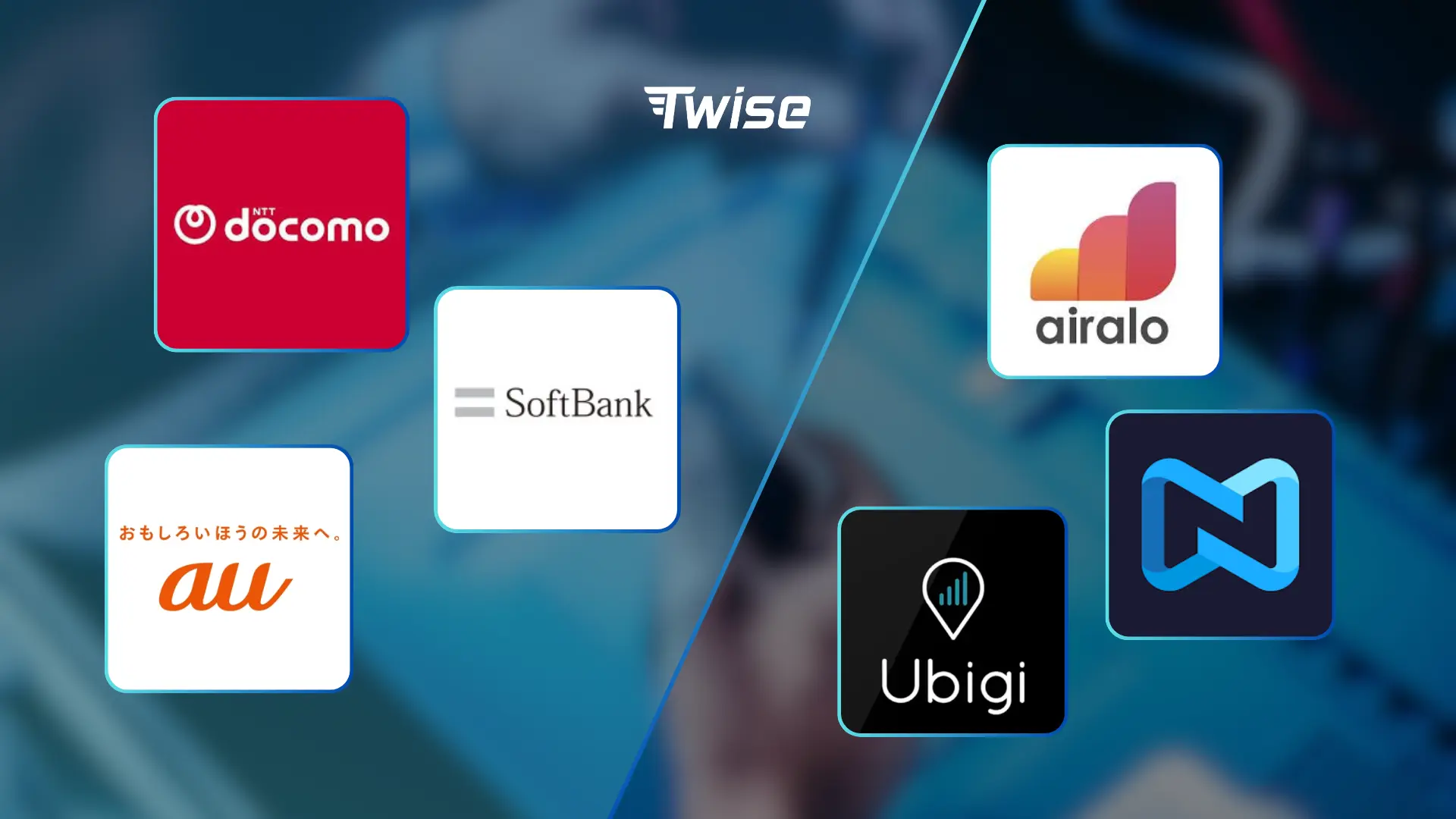
a. Twise Japan eSIM (SoftBank / KDDI Networks)
Twise offers some of the most competitively priced 30-day Japan eSIM plans currently available, making it a strong choice for travelers who need longer validity without sacrificing network quality.
Why Twise stands out:
- Affordable 30-day plans ranging from 10GB to 50GB, suitable for both light and heavy data users
- Powered by Japan’s domestic carriers, including SoftBank and KDDI (AU)
- Consistent performance in urban and rural areas, from major cities to regional destinations
- Hotspot and tethering supported, ideal for families, remote work, and multi-device use
- Easy online purchase with instant QR code delivery, allowing setup before departure
For travelers selecting Twise plans operating on the KDDI (AU) network, performance is especially reliable:
- Faster and more stable connections in subways, indoor locations, and crowded transit zones
- Strong 4G/5G coverage across Tokyo, Osaka, Kyoto, and regional areas
- Lower congestion compared to roaming-based international eSIMs
By working directly with Japanese domestic networks, Twise delivers true local eSIM performance rather than international roaming speeds. This makes Twise particularly suitable for 30-day stays, digital nomads, and travelers who want stable connectivity from day one without relying on physical SIM cards or pocket WiFi.
Official website: https://twise.tech/esim/
b. Ubigi (Docomo Network)
Ubigi is widely regarded as one of the strongest choices for a Japan eSIM 30 days plan, particularly for travelers venturing beyond major cities.
- Operating on the Docomo network, Ubigi delivers excellent rural coverage and highly stable performance across Japan.
- This makes it well suited for long-term travelers, road trips, and those spending significant time in smaller towns or countryside areas where network reliability is critical.
c. Airalo (Sakura eSIM)
Airalo’s Sakura eSIM offers dedicated 30-day plans and is known for its smooth, app-based installation process.
- It is a popular option among convenience-focused travelers who want a familiar global brand and a simple setup experience.
- While coverage is solid thanks to the Docomo network, performance can vary during peak hours due to roaming arrangements, which is worth considering for heavy users.
d. Nomad Japan
Nomad provides flexible data options designed to accommodate different usage levels over a 30-day stay.
- With a clean, user-friendly mobile app and straightforward plan management, Nomad strikes a good balance between price and ease of use.
- It appeals to travelers who want control over their data without dealing with overly complex plan structures.
e. Klook Japan eSIM
Klook does not operate its own network but resells Japan eSIM 30 days plans from partner providers.
- It is particularly convenient for Southeast Asian travelers who already use Klook to book activities, transport, or accommodations.
- These eSIMs are often bundled with other travel services, but performance and speeds depend on the underlying provider, so the experience may vary by plan.
6. Cost Comparison — Daily vs Fixed Data for 30 Days
Daily data plans
- Daily data plans typically allocate a set amount of data per day—commonly 1 GB/day (equivalent to ~30 GB total) or 2 GB/day (~60 GB total) over a 30-day period.
- While this structure helps ensure you have a predictable daily allowance, it generally results in a higher cost per GB compared with fixed data options, since you’re paying for unused data on lighter usage days.
- Daily data plans are best suited for light-to-medium users who prefer consistent daily limits and aren’t planning heavy downloads or streaming.
Fixed data plans
- In contrast, fixed data plans give you a lump sum of data to use freely over the entire 30 days.
- Options like 20 GB are usually the cheapest choice for moderate users, while 30 GB plans hit a sweet spot for many long-stay tourists balancing cost and data needs.
- For travelers who anticipate substantial use—such as frequent video calls, navigation, and media streaming—50 GB fixed plans offer ample capacity without the per-GB premium of daily plans.
- Across most usage profiles, fixed plans represent the best overall value, thanks to lower effective costs and the freedom to distribute data as needed.
Unlimited plans (KDDI)
For those with exceptionally high data demands—such as remote workers needing hotspot use or continuous high-definition streaming—unlimited plans (often on KDDI networks) are an option.
- However, these plans are typically 2–3× more expensive than even generous fixed data allowances
- They are only recommended for extreme usage scenarios where throttling or overage would severely impact productivity or experience.
7. How to Buy a 30-Day Japan eSIM Before Traveling
Step-by-step guide:
- Check if your phone supports eSIM
- Choose a provider based on your data habits (Twise recommended)
- Purchase online and receive your QR code instantly
- Install the eSIM before departure
- After landing, turn on Mobile Data and Data Roaming
- Select SoftBank, KDDI, or Docomo network if needed
Conclusion – Which One Should You Choose?
For a Japan eSIM 30 days, the right choice depends entirely on your usage style:
- Daily data plans are predictable and simple, best for light users
- Fixed data plans are flexible, cost-effective, and ideal for most 30-day trips
- Unlimited (FUP) plans should be reserved for heavy users and remote workers
Most travelers will find that a fixed data japan esim—especially a 30–50GB plan—offers the best balance of freedom, reliability, and price.
For dependable performance, transparent pricing, and easy setup, Twise Japan eSIM plans remain one of the strongest recommendations for long stays in Japan.
Twise’s customer support is available 24/7 to assist you. You can contact them through the official channels below for immediate help:
– Facebook Fanpage: Twise
– Email: support@twise.tech
– WhatsApp: (+1) 818-915-0777
